What is Paradoxical Adipose Hyperplasia?
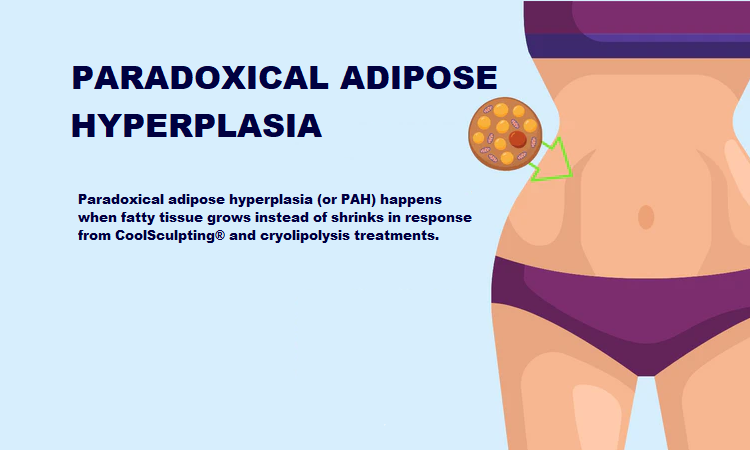
Paradoxical Adipose Hyperplasia (PAH) is a fat-related complication that may develop after non-invasive fat freezing procedures. Technically, cryolipolysis or fat reduction/CoolSculpting therapy leads to severe changes. It is famous for freezing fat cells to crystalize them so they can easily flush out of the body naturally over time. However, this treatment is considered safe and effective. But PAH is real, which is a paradoxical response.
Let’s understand it in a simple way. This condition can be recognized as enlarged fat cells. Though cryolipolysis is used to remove fat cells, the adverse happens leaving those cells enlarged. It creates a firm bulge in the very area where fat reduction treatment was done originally.
Although PAH is not a harmful or disastrous medical condition, it can break the confidence of the patient. Or they may be distressed because of that inflation of unwanted fat cells growth.
Let’s share some more details about what it is, why it occurs, and how doctors manage this condition.
How PAH Occurs: The Paradox Explained
First, understand how cryolipolysis works. It typically targets fat cells by exposing them to cold temperatures. It is a fact that these cells are sensitive to cold temperatures. Considering this fact, aesthetic doctors recommend this non-invasive fat reduction procedure. And in most cases, it crystallizes fat cells, which break down gradually. In rare cases, these cells react contrarily. Instead of shrinking, they become larger, and in worse cases, they multiply also. So, the increased volume becomes noticeable.
However, people see these changes typically after two to five months after the non-invasive fat-reduction procedure. They observe changes in that area like the skin becoming firmer than normal fat. It appears demarcated. Though it’s not painful unless inflammation accompanies this condition, patients see applicator size fat enlargement there.
Research suggests that PAH may show the combined effect of the body’s inflammatory responses, genetic predispositions, and cellular resistance to cold-induced therapy. Certainly, there are only a few reasons. However, the exact root cause is yet to be discovered.
How Common Is PAH?
In numbers, PAH cases are rare. However, earlier reports indicated that only 1 out of 20,000 treatments was the case. But now, it’s 1 in 3,000 or 6,000 cryolipolysis procedures. Despite this fact, it is still considered an uncommon complication.
Today, people should be aware of its downside or PAH as this non-invasive fat reduction therapy is now accessible to laymen. As there are not so many cases of this fat condition, individuals blindly intend fat-reduction results.
Who Is at Risk of Developing PAH?
For sure, doctors cannot reveal their definitive set of risk factors. But some clinical observations indicate that PAH need attention:
- Males are more prone to this adverse effect than females.
- Individuals with Hispanic or Latino genetic backgrounds can become its victim.
- Those who prefer repetitive cryolipolysis sessions
- People with larger applicators or higher suction settings can be a reason.
- Patients whose fat tissue is denser or fibrous
- Patients with denser or fibrous fat tissues can also be prone to it.
Apart from these, some lifestyle changes, metabolic conditions, and hormonal influences can be its causes.
Signs and Symptoms of PAH
Now, let’s discover what signs indicate that it’s PAH. As aforesaid, this condition gradually emerges, but not immediately. Early changes may be untraceable. But as time passes, the condition becomes noticeable. Fat tissues enlarge, forming
- A gradual and painless bulge in the treated area
- The skin looks like a rubbery texture or even harder.
- One can clearly notice the shape of the applicator.
- The body does not gain weight significantly.
This fat condition gradually emerges. Patients remain unaware of what’s going wrong with their body until they see some visible changes.
Diagnosis of Paradoxical Adipose Hyperplasia
A clinical evaluation by a dermatologist, plastic surgeon, or cosmetic specialist is typically sufficient for diagnosing PAH. Diagnosis is based on:
Since it’s a medical condition, patients must visit a dermatologist, plastic surgeon, or cosmetic specialist to discover why this condition occurred. Mostly, these specialists need your treatment history, and a physical examination report, eliminating weight gain, or imaging like ultrasound or MRI in some cases.
Its early detection is helpful because this condition is not going to be addressed within days on its own. You may have to continue visiting the specialist doctor unless you are treated completely.
Is PAH Dangerous?
For sure, PAH is not a harmful health condition. This is simply because it does not make you bedridden, infected, or other systematic complications. However, this condition can be psychologically significant because patients often appear
- Disappointed with physical appearance
- Emotionally traumatized
- Irked or frustrated for investing in a fat-reduction procedure that did the opposite to them.
- Frustrated after investing in a procedure intended to reduce fat.
Therefore, it is necessary to be aware of and essential.
How Is PAH Treated?
There are multiple treatments that can undo the effect of PAH. But they are mostly surgical. Let’s introduce you to them.
1. Liposuction
The fat matures after six or nine months. This is the time when liposuction can be performed to remove the enlarged tissues. It is one of the most common beauty treatments to restore the contour successfully.
2. Abdominoplasty or Excision Surgery
When liposuction does not show much improvement, try abdominoplasty or excision surgery. It is ideally recommended to treat larger and fibrous cases.
3. Combination Treatments
There is another fat liquefaction technique called laser lipolysis, which melts excessive fat cells using laser beams.
Overall, PAH is an addressable condition. However, it makes fat cells firm and fibrous. Patients must wait for a few months unless fat tissues reach their maturity level. This much patience pays off in the end.
Medical FAQ: Lipolysis (laser): does it entirely remove fat cells like Liposuction does?
Laser lipolysis shrinks and breaks down fat cells, but it does NOT remove them completely answered by trusted medical professionals.
Can PAH Be Prevented?
However, what is likely to happen will happen. But you can expect a less risky situation if your doctor:
- Is certified and has experience in addressing non-invasive fat reduction.
- Uses the right applicator & its settings according to the bulginess.
- Conducts a proper medical examination beforehand.
- Spaces fat reduction sessions as per guidelines.
- Tracks some early signs of unusual fat growth
There must not be any gap between the doctor and the patient’s communication. It helps in understanding risks, patients’ consent, and managing their expectations.
Conclusion
In essence, paradoxical adipose hyperplasia is a fat cell enlargement condition, which is not so common. It is an aftermath of improper cryolipolysis or genetic revolution. For sure, it can be treated through lasers and surgical methods. People who are likely to undergo cryolipolysis procedure must be aware of its symptoms, causes, and management alternatives. This guide will help in navigating challenges associated with this fat cells’ condition.